


Greenland, the United States, and a New Source of Strategic and Market Uncertainty

The global international system is undergoing a profound structural transformation. What we are witnessing today is not a temporary crisis of institutions or a cyclical downturn in global stability, but a systemic transition from a unipolar order toward a multipolar world. This transition affects political power, economic rules, military alliances, and the architecture of global security.
The key structural breakpoints of this transition can be traced to 2011, 2014, and 2022. Each of these periods marked a fundamental rupture in the established rules of the international system. Since then, economic globalization, security guarantees, and diplomatic mechanisms have increasingly failed to operate under previously accepted assumptions.
The new world order is not being negotiated in conference halls — it is being constructed in real time, through crises, conflicts, and strategic pressure. One of the principal architects of this emerging order remains the United States.
The United States and the Reconfiguration of Global Governance

Against the backdrop of declining effectiveness of traditional international institutions, the United States has increasingly explored alternative formats of global coordination. These initiatives reflect growing dissatisfaction with existing multilateral mechanisms, particularly the United Nations, which is widely perceived as slow, costly, and structurally incapable of responding to modern regional and hybrid conflicts.
The emerging U.S. approach emphasizes:
direct negotiations between political leaders and foreign ministers,
faster political and economic coordination,
flexible coalitions rather than rigid universal institutions,
pragmatic responses to regional crises rather than consensus-based paralysis.
This logic becomes increasingly relevant as the world enters a phase of simultaneous regional conflicts, resource competition, and fragmented security arrangements. In this environment, speed, leverage, and strategic positioning become more important than universal legitimacy.
Greenland as a Strategic Pivot in the Emerging World Order

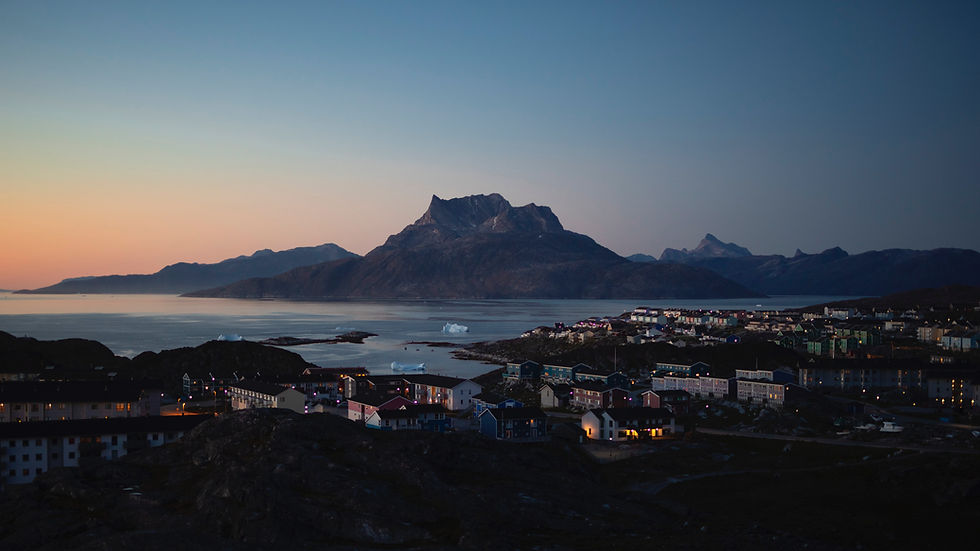
Within this broader context, Greenland has moved from geopolitical periphery to strategic focal point.
Public discussions within the United States about Greenland potentially becoming part of the U.S. — even hypothetically — should not be dismissed as rhetorical excess. Such statements are indicators of long-term strategic interest, rooted in geography, security, and, most importantly, access to critical resources.
For Europe, the risks associated with Greenland are not primarily territorial, but systemic — touching on security architecture, alliance cohesion, and access to strategic materials.
NATO, Europe, and the Crisis of Collective Security

The European Union is increasingly confronted with the necessity to rethink its security model. NATO, originally designed for deterrence, localized military operations, and counterterrorism, is now facing a structural crisis.
The contemporary security environment is defined by:
large-scale continental conflicts,
hybrid warfare,
indirect involvement of multiple state and non-state actors,
strategic ambiguity rather than formal declarations of war.
Recent incidents — including attacks affecting NATO territory without triggering Article 5 in practice — have exposed a critical gap between formal guarantees and political reality. As a result, internal debates within NATO have intensified around:
reforming the alliance,
creating parallel or supplementary security arrangements,
or, in the long term, the emergence of new military blocs alongside or beyond NATO.
For investors and markets, this translates into a rising geopolitical risk premium, particularly across European assets.
Why Greenland Matters: Strategic Resources and Hard Numbers
The strategic importance of Greenland is primarily driven by its extraordinary concentration of critical minerals, many of which are essential for advanced technologies, defense systems, and the energy transition.
Rare Earth Elements (REEs)
According to geological assessments and data from the U.S. Geological Survey (USGS) and European geological institutions:
Greenland contains approximately 1.5 million tons of confirmed rare earth element reserves.
Broader geological estimates suggest up to 36–42 million tons of rare earth oxides in potential resources, placing Greenland among the largest REE holders globally — potentially second only to China.
For comparison:
China holds approximately 44 million tons of REE reserves,
the United States holds around 1.9 million tons.
Rare earth elements are indispensable for:
electric vehicle motors (neodymium, dysprosium),
wind turbines,
semiconductors,
aerospace and defense systems,
advanced optics, lasers, and satellite technologies.
Currently, China controls roughly 70% of global REE mining and over 90% of processing capacity, creating a major strategic vulnerability for the United States and its allies.
Silver, Copper, and Associated Metals
Greenland also hosts significant deposits of silver, typically extracted as a byproduct of polymetallic mining operations. Silver is rarely mined in pure form; instead, it is recovered alongside copper, zinc, and lead.
Silver is a critical industrial and strategic metal, essential for:
electric vehicles,
solar panels,
semiconductors,
data centers,
advanced military electronics.
Structural demand for silver is rising due to:
electrification,
digital infrastructure expansion,
military modernization programs.
Notably, the United States has already introduced restrictions and strategic oversight on silver supply, signaling its transition from a purely industrial commodity to a strategic asset.
Graphite, Lithium, Titanium, and Critical Inputs
In addition to REEs and silver, Greenland possesses substantial resources of:
graphite (estimated ~6 million tons),
lithium (estimated ~235,000 tons),
titanium ores (over 12 million tons),
nickel, vanadium, molybdenum, niobium, and tantalum.
These materials are essential for:
battery production,
aerospace alloys,
defense manufacturing,
advanced energy storage systems.
From a strategic standpoint, Greenland represents a concentrated repository of materials critical to 21st-century industrial and military power.
Environmental Constraints and Regulatory Asymmetry

Despite its resource wealth, Greenland faces significant extraction challenges:
Approximately 80% of its territory is covered by ice, limiting accessible land.
Infrastructure is minimal — roads, ports, and energy systems are underdeveloped.
Environmental regulations linked to European frameworks significantly constrain mining activities.
Greenland has imposed bans on certain types of mining, particularly involving radioactive byproducts.
By contrast, the United States has withdrawn from several international environmental agreements, granting it greater regulatory flexibility. This asymmetry increases U.S. interest in renegotiating access and governance structures around Greenland’s resources.
Autonomy, Independence, and Strategic Pressure
In recent years, Greenland openly discussed scenarios of:
expanded autonomy,
gradual movement toward independence.
However, rising geopolitical pressure dramatically alters this equation. Independence in a zone of strategic competition between major powers significantly increases vulnerability.
As a result, centrifugal political tendencies within Greenland are likely to weaken rather than intensify. Stability, external guarantees, and controlled integration become preferable to exposure.
Rewriting Alliances and Resource Agreements

The situation surrounding Greenland should be understood as part of a broader process:
renegotiation of NATO’s role,
restructuring U.S.–European security commitments,
development of new bilateral and multilateral resource agreements.
The United States may seek:
expanded military presence,
preferential access to strategic resources,
parity-based extraction agreements similar to those used in other regions.
Such arrangements align with a broader U.S. strategy of securing supply chains for critical materials essential to technological and military dominance.
Investor Concerns and Market Uncertainty
For financial markets, Greenland is not a local story — it is a systemic risk signal.
Investors are increasingly concerned about:
fragmentation or reform of NATO,
escalating geopolitical competition over resources,
regulatory uncertainty around mining and environmental standards,
rising defense expenditures and fiscal pressures,
instability in supply chains for critical minerals.
These factors contribute to higher volatility across:
commodity markets,
mining and technology equities,
defense sector valuations,
currencies exposed to geopolitical stress.
In effect, markets are pricing in a new era of strategic resource competition, where metals such as silver, rare earths, lithium, and copper are treated as components of national security rather than neutral commodities.
Conclusion
Greenland is not merely a geographic territory.It is a strategic reservoir of resources, a pressure point in alliance politics, and a catalyst for uncertainty in global markets.
For Europe, it represents a challenge to the existing security architecture.For the United States, it is a long-term strategic asset.For investors, it is another signal that geopolitical risk is no longer peripheral — it is becoming structural.
In the emerging world order, it is often peripheral regions that become the centers of global transformation. Greenland is one of them.
Krol and Partners
Geopolitical, Macro & Strategic Risk Research
Disclaimer:
This content represents the personal analytical opinion of the author and is provided for informational purposes only. It does not constitute investment advice, financial recommendations, or an offer to buy or sell any financial instruments.


Comments